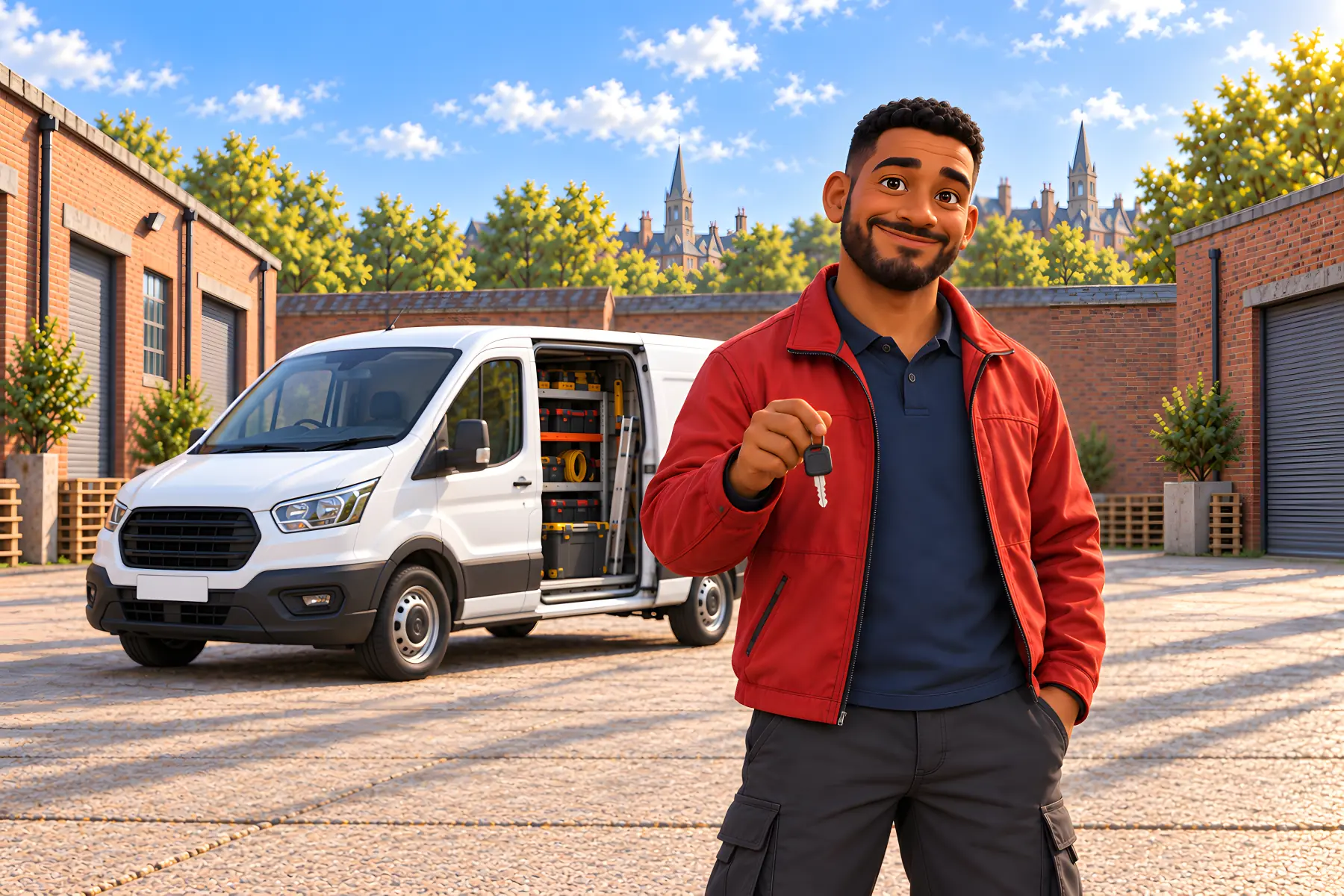
Van insurance: Cover for the van that earns your living.
Tell us the reg and we match you with brokers who specialise in van cover. About two minutes, no obligation.
- Specialist van brokers
- UK-based, FCA-regulated brokers
- No obligation
What van insurance can cover
Whatever the van does for a living, tell us and we'll pass you to brokers who insure that kind of work.
- Carriage of own goods
- Carriage of goods for hire and reward
- Haulage
- Social, domestic and pleasure
- Any-driver policies
- Goods in transit
- Tools in the van
- Breakdown cover
How it works
- Start with the reg. We look up the van from the plate, so there's less to type.
- We match you with specialists. Your details go to UK brokers who arrange this kind of cover every day.
- They call you with quotes. Compare what comes back, ask questions, and only go ahead if it's right.
Is van insurance a legal requirement in the UK?
Yes. If you drive a van on a public road, the Road Traffic Act says it must be insured for at least third-party liability. That is the legal minimum. A van that is registered but kept off the road still needs insurance unless you have made a SORN (Statutory Off Road Notification) with the DVLA.
Under the continuous insurance rules, the registered keeper is responsible for keeping the van insured, whether or not anyone is driving it. If it is not insured and not declared off the road, you can be fined and the van can be clamped, seized or destroyed.
Driving without insurance is a criminal offence. It can mean points on your licence (the IN10 endorsement), an unlimited fine and a possible driving ban, and it makes future cover harder to find.
What are the levels of van insurance cover?
There are three. Third party only is the legal minimum and covers damage or injury you cause to other people. Third party, fire and theft adds cover if your van is stolen or catches fire. Comprehensive also covers damage to your own van, even when the accident was your fault.
| Level | Other people and their property | Your van: fire and theft | Your van: accident damage |
|---|---|---|---|
| Third party only | Yes | No | No |
| Third party, fire and theft | Yes | Yes | No |
| Comprehensive | Yes | Yes | Yes |
Don't assume third party only is the cheaper choice. Insurers price on risk, and the level of cover is only one part of it. It is worth asking the broker to quote more than one level so you can see the difference for your own van.
Which class of use do I need for my van?
Class of use describes what the van is used for, and it has to match what you actually do. Getting it wrong can mean a claim is refused. Most policies fall into one of four classes: social, domestic and pleasure; carriage of own goods; hire and reward; and haulage.
Commuting to one regular place of work is usually added to SD&P. If you drive to different sites or customers, tell the broker, because that is business use.
- Social, domestic and pleasure (SD&P): personal use only, such as moving house, hobbies or day-to-day driving. No business use.
- Carriage of own goods: you use the van for your own work and carry your own tools, materials or stock. Most tradespeople need this.
- Hire and reward: you are paid to carry other people's goods. Couriers and multi-drop delivery drivers need this.
- Haulage: carrying goods for others over longer distances, usually under contract. Common for bigger vans and trucks.
What does van insurance usually cover, and what does it leave out?
A comprehensive van policy usually covers accident damage, fire, theft, and your legal liability to other people and their property. What it does not cover depends on the insurer. Tools, goods you carry, breakdown and legal costs are often optional extras rather than standard, so check before you rely on them.
Tools are a common gap. Many standard policies give little or no cover for tools left in the van overnight. If your tools are your living, ask for tools cover and check any overnight conditions, such as the van being locked in a garage or fitted with extra locks.
- Often included: third-party liability, accident damage (comprehensive), fire and theft, windscreen cover on some policies.
- Often optional: tools in the van, goods in transit, breakdown cover, motor legal expenses, a courtesy van.
- Commonly excluded: wear and tear, mechanical failure, theft when the van is left unlocked or with keys in it, and use that doesn't match your class of use.
What affects the price of van insurance?
Insurers price on how likely a claim is and how much it might cost. The main factors are the van itself, what you use it for, where it is kept, who drives it, and your claims and convictions history. The excess you choose and how you pay also make a difference.
- The van: make, model, value, size, age and any modifications.
- Class of use: business and hire and reward use usually carry more risk than personal use.
- Where it is kept: your postcode and whether it is parked on the street, on a drive or in a garage overnight.
- The drivers: ages, how long each has held a licence, and how many people are on the policy.
- History: claims and motoring convictions, usually over the last five years.
- Mileage: how far you expect to drive in a year.
- Security: approved alarms, immobilisers, trackers and deadlocks.
- No-claims bonus, voluntary excess and whether you pay annually or monthly.
How can I bring down the cost of van insurance?
Make sure the details are accurate, then look at the things you control: security, where the van is kept overnight, who is on the policy, your voluntary excess and how you pay. A broker can quote a few combinations so you can see which changes actually move the price for your van.
- Pick the class of use you actually need. Paying for hire and reward when you only carry your own tools is wasted money, and the reverse is worse.
- Fit approved security, such as deadlocks, an alarm or a tracker, and tell the insurer about it.
- Park off the road overnight if you can, on a drive or in a garage.
- Only add drivers who really need to drive the van.
- Give an honest, realistic annual mileage.
- Consider a higher voluntary excess, but only one you could afford to pay if you claim.
- Pay annually if you can. Paying monthly is often a credit agreement and can cost more overall.
- Protect and build your no-claims bonus.
What do I need to get a van insurance quote?
Have the van's registration, your driving licence details and a rough idea of your annual mileage to hand. The broker will also ask how the van is used, where it is kept overnight, who else will drive it, and about any claims, convictions or modifications. Proof of no-claims bonus may be asked for later.
- Registration number (or make, model and year if you don't know it yet).
- Your driving licence details and those of anyone else who will drive.
- How the van is used: personal, own goods, or carrying goods for others.
- Overnight postcode and where the van is parked.
- Claims and convictions, usually for the last five years.
- Any modifications, including racking, signwriting and roof bars.
- Your no-claims bonus and the date you want cover to start.
Can I drive a van on a car licence?
A standard category B car licence lets you drive a van with a maximum authorised mass (the van plus its heaviest legal load) of up to 3,500kg. Most small and medium panel vans fall within that. Above 3,500kg you need a different licence category, such as C1, or entitlement you already hold.
Check the van's maximum authorised mass in the handbook or on the plate inside the door, not just its empty weight. Tell the broker the van's details accurately so the policy matches the vehicle and your licence.
Van insurance questions
What happens after I submit?
Your details go to specialist brokers who deal with van insurance every day. One of them will call you to run through your options and quotes.
Is there any obligation?
None. You can take a quote, ask for changes, or walk away. Nothing is bought until you say so.
Who are the brokers?
UK-based insurance brokers authorised and regulated by the Financial Conduct Authority. Kompare Limited (FCA reference 794660) is an appointed representative of Rainbow Connected Limited (FRN 749881).
How long does it take?
The form takes about two minutes. Brokers usually call back during working hours.
What if I don't know the reg?
Tap "Don't know your reg?" under the plate and tell us the make, model and year instead.
Can I use my car no-claims bonus on van insurance?
Some insurers will take car no-claims into account for a van policy and some won't. Tell the broker what you have and they will look for insurers that accept it.
Are my tools covered by van insurance?
Not always. Tools in the van are often an optional extra with their own limits and overnight conditions. If you carry tools for work, ask for tools cover and check the conditions before you rely on it.
Do I need van insurance if the van is off the road?
If you have made a SORN with the DVLA, you don't need to insure it while it stays off the road. Without a SORN, the registered keeper must keep it insured, even if nobody drives it.
Does signwriting or racking affect my van insurance?
It can. Signwriting, racking, roof bars and other changes are modifications that insurers may want to know about. Declare them so the policy matches the van.
Can someone else drive my van?
Only if they are covered. You can add named drivers, or ask about an any-driver policy, which usually comes with conditions such as a minimum age. Check before anyone else gets behind the wheel.
Does my van insurance let me drive other vans?
Usually not. Cover to drive other vehicles is less common on van policies than on some car policies. Don't assume you are covered; check your certificate or ask the broker.
Written and checked by the Kompare team · Last updated October 2026
Insurance we quote
- Breakdown cover
- Courier insurance
- Motor trade insurance
- Taxi insurance
- Fleet insurance
- Tradesman insurance
- Business insurance
- Life insurance
- Home insurance
- Holiday home insurance
- Learner driver insurance
- Young driver insurance
- Convicted driver insurance
- Motorbike insurance
- Japanese import insurance
- Modified vehicle insurance